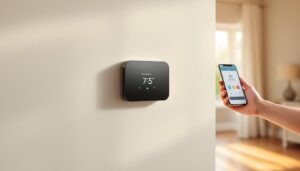
Upgrading to a smart thermostat is one of the smartest moves a homeowner can make, and right now, federal and state incentives are making it more affordable than ever. In 2026, multiple rebate programs and tax credits are helping families reduce their heating and cooling costs while cutting their energy bills. Whether you’re chasing a free smart thermostat or looking to capitalize on smart thermostat rebates from your local utility, timing matters. This guide walks you through what rebates are available, how to qualify, and how to claim them properly so you actually get the savings you deserve.
Table of Contents
ToggleKey Takeaways
- Smart thermostat rebates from utilities, states, and federal programs can reduce your upfront cost by $50–$650, with some homeowners receiving the device for free or even getting paid to upgrade.
- Stack multiple incentives by combining utility rebates, manufacturer discounts, and federal tax credits (up to $300 for Energy Star-certified models) to maximize your savings.
- Contact your utility company first—they offer the most generous smart thermostat rebate programs and have streamlined claims processes that deliver results in 30–90 days.
- Proper installation on an interior wall away from sunlight and drafts, plus enabling the thermostat’s learning features, ensures you achieve the promised 10–15% annual savings on heating and cooling costs.
- Submit complete documentation including receipts, proof of purchase with model and serial numbers, and installation photos within rebate deadlines to avoid claim rejections.
What Are Smart Thermostat Rebates?
A smart thermostat rebate is a refund or discount offered by utilities, manufacturers, or government agencies to encourage homeowners to install more efficient climate control. Rather than paying full price upfront, you purchase a qualifying smart thermostat and then submit proof of installation to receive money back, sometimes hundreds of dollars depending on your location and the program.
These rebates exist because smart thermostats reduce energy consumption. They learn your schedule, adjust temperatures automatically when you’re away, and give you remote control via smartphone. A homeowner might save 10-15% on heating and cooling costs annually, which adds up quickly. Utilities love this because lower demand means they don’t have to build as much infrastructure. Manufacturers push them because the rebates remove purchase barriers. And you win by getting a free smart thermostat or substantial discount while shrinking your energy footprint.
The catch? Not all rebate programs are created equal. Some cover installation labor, others don’t. Some require your thermostat to meet specific energy efficiency standards (like Energy Star certification). Some are one-time offers: others renew annually. Understanding which programs apply to your address, income level, and utility provider is critical before you buy.
Federal and State Rebate Programs Available Now
Energy Star and Tax Credits
The Energy Star program, backed by the EPA, recognizes smart thermostats that meet strict energy-efficiency benchmarks. If you purchase an Energy Star-certified model, you may qualify for a federal tax credit of up to $300 when you file your 2026 tax return. This is plus to any state or utility rebates.
Tax credits work differently from rebates. Instead of getting a check, you claim the credit on your tax return, reducing your overall tax liability. For families in higher tax brackets, this can be more valuable than a straight rebate. But, tax credits are only useful if you owe taxes: if you get a large refund, you’re limited by what you owe.
Several states, including California, New York, and Massachusetts, layer additional state-level incentives on top of federal credits. California’s Self-Generation Incentive Program (SGIP) rewards homeowners for installing smart thermostats alongside solar or battery systems. Some states offer direct rebates instead of tax credits, meaning you get cash back immediately rather than waiting until tax season.
Local Utility Rebates
Your utility company is often the most generous rebate source. ConEd in New York, ComEd in Illinois, and Duke Energy across the Southeast all offer annual smart thermostat rebates ranging from $50 to $300+ depending on the model and your utility’s savings goals.
Utility rebates usually work like this: You purchase a qualifying smart thermostat (your utility publishes an approved list), install it, and submit a rebate form with proof of purchase and installation photos within 30-90 days. The utility processes the claim and mails you a check or applies a credit to your account.
The real win? You can often stack a utility rebate on top of a manufacturer rebate and a federal tax credit. A $250 utility rebate plus a $100 manufacturer discount plus a $300 tax credit could cut your net cost by $650. Some homeowners end up with a free smart thermostat or even get paid to upgrade. Current smart thermostat deals and incentives vary by location, so checking your utility’s website first saves time and ensures you pick an eligible model.
How to Find and Claim Your Rebate
Finding the rebates you qualify for requires checking three main sources: your utility provider, your state’s energy office, and federal tax credit eligibility.
Step 1: Contact your utility. Go to your utility company’s website or call customer service and ask about smart thermostat rebates or energy efficiency programs. Write down any program name, eligible thermostat models, rebate amount, deadline, and required documentation. This is the fastest path because utilities handle thousands of these claims, they have streamlined processes.
Step 2: Check your state’s energy office. Most states maintain a central database of available rebates, often linked through the Database of State Incentives for Renewables & Efficiency (DSIRE) or your state’s public utility commission website. Filter by “smart thermostat” or “HVAC controls” to see what state-level programs exist.
Step 3: Review federal tax credit rules. Visit the IRS website or consult a tax professional to confirm your thermostat meets Energy Star certification and falls within eligible installation dates. Keep all receipts and installation photos because the IRS may request proof if audited.
Step 4: Purchase and install. Once you’ve identified qualifying programs, buy an approved model and install it (or have it professionally installed if labor is required). Many utilities accept DIY installation: others require a licensed technician. Install it promptly, some rebate windows close after 12 months.
Step 5: Submit your claim. Gather copies of your receipt, proof of purchase (credit card statement or invoice with model number and serial number), and installation photos showing the thermostat mounted and operational. For utility rebates, submit online through their portal or mail a physical form. For tax credits, keep documentation in a file and attach it to your tax return.
Pro tip: Save everything. Utilities are increasingly suspicious of fraudulent claims, so clear photos of the thermostat’s display screen and the installation date stamp matter. If you’re aiming for a free smart thermostat through stacked rebates, understanding how to navigate each program’s documentation prevents rejections or missed deadlines.
Installation Tips for Maximum Efficiency
Once you’ve claimed your rebate, proper installation ensures you actually achieve those energy savings the rebate program promises.
Location is everything. Install your smart thermostat on an interior wall, away from direct sunlight, drafts, doors, windows, or heat sources like vents or radiators. A thermostat in a sunbeam will read higher than your actual living space and cycle the air conditioner more than necessary, wasting the savings your rebate was supposed to unlock.
Follow the wiring diagram. Smart thermostats use the same basic wiring as mechanical ones, typically 24-volt power lines from your HVAC system. But, some older heating systems lack a “C” wire (common return), which powers smart thermostats. If your system lacks one, you’ll need an adapter (a small box that tricks the thermostat into thinking power exists). This typically runs $20-50 at a hardware store and takes 15 minutes to install. If you’re uncomfortable with low-voltage wiring, call an HVAC tech, usually $100-200 for a service call, still well below the rebate savings.
Program wisely. Smart thermostats learn your schedule after a week or two, but manually set a baseline first. Aim for 68°F in winter and 74°F in summer as defaults, then adjust based on comfort. The thermostat will suggest schedules: tweak them over time. Many people get a free smart thermostat or claim rebates but never configure the learning features, so they miss 30-50% of potential savings.
Integrating with other smart home systems (if you have them) amplifies efficiency. A smart thermostat paired with motion sensors can skip heating or cooling unoccupied rooms. Combined with smart blinds, it can reduce solar heat gain. These layers aren’t required to claim your rebate, but they’re how you maximize the energy reductions that justified the incentive in the first place.
Conclusion
Smart thermostat rebates in 2026 represent a genuine opportunity to reduce both your upfront cost and your monthly energy bill. By stacking utility rebates, state incentives, and federal tax credits, many homeowners can install a smart thermostat at minimal or zero cost. The key is doing your assignments upfront, identifying which programs apply to your address, confirming model eligibility, and submitting claims promptly. Pair that diligence with proper installation and thoughtful programming, and your smart thermostat becomes a true money-saver, not just a discounted gadget.