Smart locks have moved beyond novelty into genuine security upgrades for homeowners serious about access control. The Lockly smart lock sits squarely at the intersection of convenience and robust protection, offering features that justify the investment for DIYers and security-conscious homeowners alike. Whether you’re retrofitting an existing door or starting fresh, understanding how Lockly compares to the wider market helps you make a confident purchasing decision. This review walks through what sets Lockly apart, how to install it, what security layers it includes, and whether the price tag aligns with real-world value.
Table of Contents
ToggleWhat Makes Lockly Stand Out From Other Smart Locks
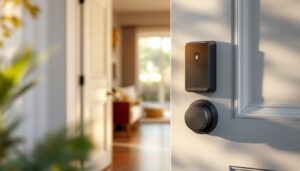
Lockly differentiates itself through a combination of high-res video capture, encrypted communication, and a sleek industrial design that doesn’t scream “tech gadget” on your front door. Unlike basic keypad or Bluetooth-only competitors, Lockly integrates a built-in camera, visible fingerprint scanner (on select models), and real-time alerts into one package.
The Secure+ encryption protocol is worth noting: Lockly uses a multi-layer approach rather than relying on a single wireless standard. This redundancy means your access codes and live-view footage aren’t funneled through a single point of failure. Most entry-level smart locks skimp on this detail, leaving your lock vulnerable to brute-force attacks or Man-in-the-Middle intercepts.
The fingerprint unlock feature (found on models like the Vision and Vision 2) adds another layer without extra steps, no fumbling for a code when your hands are full of groceries. That said, fingerprint sensors can struggle in cold weather or with wet fingers, so it’s a convenience tool, not a replacement for keypads and physical keys.
Compared to August, Yale Assure, and Level Lock competitors, Lockly’s video integration feels native rather than bolted-on. CNET offers a comprehensive, breaking down video quality, app responsiveness, and hardware durability side-by-side with other brands.
Installation and Setup: A Homeowner’s Guide
Before you commit to a Lockly, confirm your door is compatible. Most Lockly models fit standard US deadbolts (1.375″ throw, 2.125″ backset being the norm for residential doors), but older or non-standard doors may need a professional fit.
Compatibility and Compatibility Checks
Measure your door’s backset, the distance from the outside edge of the door to the center of the deadbolt hole. Standard backsets are 2.125″ and 2.375″: anything outside that range requires special consideration or professional installation. Check whether your door frame is wood, metal, or composite: Lockly’s mounting hardware works with all three, but composite doors sometimes have installation quirks due to material thickness.
Confirm you have a WiFi network covering your entryway. A 2.4 GHz band works best for Lockly devices: they can struggle with 5 GHz-only networks in some cases. If your WiFi signal is weak at the door, invest in a mesh router or extender first, a weak connection creates lag in notifications and unlock delays.
The installation itself takes about 30–45 minutes for most homeowners. You’ll remove the old deadbolt (a screwdriver and 15 minutes of work), install the Lockly mechanism, and mount the exterior escutcheon. No drilling or door modification is necessary if you’re replacing an existing deadbolt.
Download the Lockly app and register your lock before you head to the door. The setup walks you through WiFi pairing, fingerprint enrollment (if applicable), and access code creation. Digital Trends provides walkthrough, helping you troubleshoot WiFi pairing if you hit snags.
Security Features That Give You Peace of Mind
Lockly’s security stack addresses both physical and digital attack vectors. The fingerprint scanner (on Vision and Vision 2 models) uses optical recognition rather than the capacitive touch found on budget smart locks: optical scanners are harder to spoof with fake prints and perform better when dirty or wet, though fingerprints still aren’t foolproof in every scenario.
The built-in HD video camera (1080p minimum, 2K on newer models) records motion-triggered events and provides live streaming through the app. The footage is encrypted end-to-end, meaning even Lockly staff can’t view your clips without your permission. Cloud storage options range from free (30–90 day rollover) to paid plans with extended retention.
Access logging is granular: you see who unlocked the door, when, and how (fingerprint, code, keypad, or physical key). This audit trail is invaluable if you’re managing rental properties, allowing elderly parents, or hosting cleaners and contractors. Temporary access codes can be set with expiration dates and time windows (e.g., “valid only Wednesday 10 AM–2 PM”).
One caveat: no smart lock is immune to physical bypass. A determined intruder with bolt cutters or a pry bar can still force entry. Lockly is a deterrent and convenience upgrade, not a replacement for a sturdy door frame, deadbolt strike plate, and good neighborhood awareness. If you live in a high-crime area, pair the lock with motion-sensor lighting and visible security cameras.
Tom’s Guide reviews Lockly, offering benchmark testing for camera clarity and encryption robustness.
User Experience and Mobile App Functionality
The Lockly mobile app is the nerve center of day-to-day use. It’s available on iOS and Android, and the interface is intuitive for most users, unlock, lock, and check status in one tap. Push notifications arrive instantly when someone rings the doorbell, attempts to unlock, or uses a preset access code.
Multi-user management is smooth. You can add family members, guests, and service providers with granular permissions. A cleaning service might get a 2-hour window on Thursdays: a houseguest gets a 48-hour open code that auto-disables. Revoking access is immediate, no waiting for a code to expire.
The app’s live-view video feed has a 3–5 second latency on a solid WiFi network: anything slower suggests a WiFi bottleneck rather than a Lockly problem. Two-way audio is available on certain models, letting you communicate with whoever’s at the door without opening it.
One small friction point: Lockly integrates with Amazon Alexa and Google Home, but voice unlock (“Alexa, unlock my door”) isn’t available, by design, as a security measure. You can ask Alexa to lock the door or check status, but unlocking requires the app or physical method. This restriction feels overly cautious to some users but is a reasonable security trade-off.
Battery life on the lock itself runs 6–12 months depending on usage frequency. The app alerts you when the battery drops below 20%, and replacement is four AA batteries, standard, affordable, and available anywhere. Low-battery locks still function: they simply stop sending WiFi updates until you swap batteries.
Pricing, Warranty, and Value for Money
Lockly’s pricing varies by model. The basic Lockly Pro (keypad + app + video, no fingerprint) typically runs $250–$350. The Vision (adds fingerprint and higher-res video) costs $350–$450. The Vision 2 (latest iteration, improved processor, faster WiFi 6) lands in the $400–$500 range. These are manufacturer MSRPs: sales and bundles can reduce costs by 15–20% during major shopping events.
Compare this to Yale Assure 2 ($350–$400), Level Lock ($300), and August Pro ($300–$350). Lockly is mid-to-premium tier, not the cheapest but not the costliest either. The value argument hinges on whether you want integrated video, if you’re buying Lockly and a separate video doorbell, you’re paying redundantly.
Lockly includes a one-year manufacturer warranty covering defects in materials and workmanship. Extended warranties (typically 2–3 years) are available at purchase for an extra $50–$100. Given that smart locks are solid-state with few moving parts, failures are rare: a one-year warranty is standard industry practice.
Cloud storage for video is where subscriptions come in. Free tiers offer 30–90 day rolling storage: if you want 365-day retention and advanced event filtering, paid plans run roughly $5–$15 per month. The cost stacks, so factor ongoing subscriptions into your total cost of ownership.
For most homeowners, a Lockly lock pays for itself through the convenience of not managing multiple physical keys, the peace of mind of recorded entries, and the reduced need for rekeying if a key is lost. If you’re a long-term stay-in-place homeowner, the ROI is solid: if you rent or move frequently, the resale value is less certain.
Conclusion
The Lockly smart lock delivers credible security, excellent app integration, and a design that doesn’t look out of place on a residential door. Installation is straightforward for most homes, and the feature set justifies the mid-premium price point. It’s not the cheapest smart lock on the market, nor is it necessary for every homeowner, but it’s a smart upgrade if you value video surveillance, secure access logging, and reliable cloud connectivity. Do your backset measurement, confirm WiFi coverage, and budget for optional cloud storage, then enjoy the confidence that comes with knowing who’s at your door, when they arrived, and how they got in.