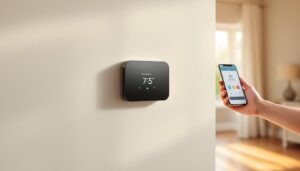
If you’re tired of manually adjusting your thermostat or watching energy bills climb, the Ecobee Smart Thermostat Premium is worth serious consideration. This isn’t about fancy automation for its own sake, it’s about giving you real control over your home’s temperature and energy use, whether you’re upstairs, across town, or on vacation. Homeowners and DIYers appreciate gear that actually solves problems, and the Ecobee Premium does exactly that. In this guide, we’ll walk through what makes it stand out, the features that matter most, and how to install it yourself if you’re comfortable with basic electrical work.
Table of Contents
ToggleKey Takeaways
- The Ecobee Smart Thermostat Premium delivers real energy savings of 15–20% annually through occupancy sensing and learning algorithms that adapt to your home’s schedule.
- Remote temperature sensors included with the Ecobee Premium allow intelligent multi-room temperature balancing, preventing the over-heating and over-cooling problems of single-point thermostats.
- Built-in Alexa voice control and Wi-Fi connectivity work without monthly subscription fees, and the device integrates seamlessly with other smart home devices to act as a network hub.
- DIY installation of the Ecobee Smart Thermostat Premium takes 30–45 minutes if you’re comfortable with basic electrical work, with a clear color-coded wiring adapter that handles homes lacking a C-wire.
- The Premium model typically pays for itself within one year through energy savings of $100–$300, making it one of the highest ROI home upgrades available to homeowners.
What Makes The Ecobee Smart Thermostat Premium Stand Out
The Ecobee Smart Thermostat Premium combines sleek design with genuine utility. Unlike budget thermostats that force you into clunky menus, the Ecobee offers a clean touchscreen interface that feels intuitive the first time you use it. The device includes a built-in voice speaker, which means you can control temperature settings hands-free without buying a separate Echo or Google Home device.
One major advantage over basic “smart” thermostats is the remote temperature sensors that come in the box. Most programmable thermostats measure temperature only where the unit sits, often a hallway. If your bedroom sits 6 degrees cooler than the thermostat’s location, it’ll over-heat the living areas trying to reach the target. The Ecobee’s included sensors (and you can add more) let the system understand temperature across multiple rooms and balance comfort more intelligently.
According to independent testing, the Ecobee Premium ranks consistently among the best smart thermostats for reliability and ease of installation. The build quality feels solid, this isn’t a gadget that’ll frustrate you in two years. It’s designed to work with both heating and cooling systems, and installation is straightforward enough for DIY work if you’ve got basic electrical familiarity and a helper available for safety.
Key Features That Transform Your Home Comfort
Voice Control And Smart Home Integration
The built-in Alexa voice assistant lets you say “Set the temperature to 72 degrees” without reaching for your phone. This isn’t gimmicky: if you’re hands-full or across the room, voice control beats walking to adjust the thermostat. It also integrates seamlessly with other smart home devices, if your smart lights, locks, and cameras are on the same network, the Ecobee becomes a hub that ties everything together.
The mobile app works reliably across iOS and Android. You can check your home’s temperature from anywhere, set schedules weeks in advance, and get notifications if something goes wrong (like a furnace malfunction). The app shows energy use history, which helps you spot patterns, maybe you’re heating or cooling when no one’s home, or running the AC too aggressively at night.
Comparable thermostats often require a separate hub or subscription service for remote access. The Ecobee works directly with WiFi, and cloud connectivity is included without monthly fees. That said, an in-depth evaluation of the Premium from independent reviewers confirms it performs best when paired with a strong 2.4GHz WiFi signal (5GHz works but can occasionally drop).
Energy Savings And Cost Reduction
The real payoff is energy efficiency. The Ecobee uses occupancy sensing and learning algorithms to avoid heating or cooling empty rooms. If it learns your family leaves the house at 9 AM, it’ll automatically switch to a lower setpoint, then return to comfort temperature before you arrive home. Over a year, this behavior alone can cut heating and cooling costs by 15–20%, depending on your climate and current habits.
The thermostat also integrates with many utility companies’ demand-response programs. In some regions, your power company can signal peak pricing times, and the Ecobee will automatically dial back usage during those windows, saving you real money without comfort loss. Setup takes a few minutes if your utility offers the program.
Thermostats are one of the highest ROI upgrades a homeowner can make. A premium unit costs $200–$300 installed (labor if you hire someone), but yearly savings of $100–$300 mean you’ll break even in one year and profit for years afterward. The thorough testing of the Premium confirms it delivers measurable efficiency gains compared to standard 7-day programmable models.
Installation And Setup For DIY Homeowners
Before you start: Turn off power at your breaker. This is non-negotiable. Smart thermostats use low-voltage wiring (typically 24V), but your furnace or AC is serious electrical equipment. Flipping the breaker keeps you safe and protects the system.
What you need:
- The Ecobee thermostat and included wiring adapter
- A flathead screwdriver (for terminal screws)
- A smartphone with WiFi access
- Your old thermostat’s wiring diagram or a photo of it before removal
- Optional: a digital multimeter to verify the old system is off
Step-by-step:
-
Photograph your current setup. Before touching anything, take a clear photo of every wire connected to your old thermostat and note its color and terminal position. If wires are unlabeled, use a marker to label them yourself (R for red/power, W for white/heat, Y for cooling, G for fan, C for common).
-
Kill the power at your breaker, then remove the old thermostat from the wall.
-
Check for a C-wire. Smart thermostats need a continuous power supply. Most older homes use only R, W, Y, and G wires, no C. The Ecobee includes a wiring adapter that bridges this gap. Don’t skip this: without it, your thermostat will drain its battery within weeks.
-
Connect the Ecobee. The instructions are clear and color-coded. Each wire attaches to its corresponding terminal on the Ecobee baseplate. Use the flathead screwdriver to secure each wire: don’t overtighten or you’ll damage the terminal.
-
Mount and power up. Once wiring is complete, restore power at the breaker. The Ecobee should boot up automatically. Follow the on-screen setup wizard to connect to WiFi, enter your location, and link your HVAC system type (furnace, heat pump, AC-only, etc.).
-
Install sensors. Place the included remote sensors in bedrooms or other rooms where temperature matters. The app will guide placement. Sensors communicate with the thermostat via WiFi and report temperature every few minutes.
Honest take: If you’re comfortable with basic electrical work and can follow instructions, installation takes 30–45 minutes. If you’re uncertain about wiring or your home’s electrical system is unusual, hire a licensed HVAC tech. Most charge $100–$200 for installation, worth it for peace of mind and a warranty.
Common hiccups:
- WiFi connectivity issues: Make sure your router is in reasonable range and the network is 2.4GHz (not 5GHz-only). Mesh WiFi systems work great.
- Battery drains fast: This means the C-wire adapter isn’t working. Check terminal connections and reattach.
- Old furnace won’t start: Verify you connected the R and W terminals correctly. A multimeter helps confirm voltage.
Conclusion
The Ecobee Smart Thermostat Premium is a smart upgrade that pays for itself through energy savings while improving comfort and convenience. The built-in voice control, app integration, and remote sensors address real problems that older thermostats ignore. Installation is DIY-friendly if you’re handy and methodical about shutting off power and labeling wires.
If you’ve been on the fence about smart home upgrades, start here. A thermostat runs 24/7 and directly impacts your utility costs. Get this one right, and you’ll wonder how you lived without it.