When it comes to upgrading home security, a SimpliSafe smart lock offers a practical entry point for homeowners looking to move beyond traditional key-and-deadbolt setups. Whether you’re managing guests remotely, adding a layer of convenience to your daily routine, or integrating your front door into a larger smart home ecosystem, this type of lock delivers real-world benefits without requiring extensive renovation. Unlike complicated security systems that demand professional installation and licensing, a SimpliSafe smart lock can fit into your existing setup, and often your existing door frame, with minimal fuss. This guide walks you through what makes these locks tick, how to install one, and whether it’s the right choice for your home.
Table of Contents
ToggleKey Takeaways
- A SimpliSafe smart lock replaces your traditional deadbolt with keyless entry via smartphone app, PIN codes, or physical key, solving problems like forgotten keys and remote guest access.
- SimpliSafe smart locks use AES-128 encryption and store codes locally on the lock rather than in cloud databases, reducing security vulnerabilities compared to cloud-dependent systems.
- Installation takes 30–60 minutes with basic tools if your door has a standard mortise, and the lock integrates seamlessly with existing SimpliSafe security systems or works standalone for $150–$350.
- Battery life typically lasts 6–12 months on standard AA or 9V batteries with low-battery alerts, and a manual key override ensures you’re never locked out even if the battery dies.
- SimpliSafe smart locks create audit trails showing who unlocked the door and when, and allow you to grant temporary or permanent access codes to family, contractors, or guests with instant revocation if needed.
- A SimpliSafe smart lock works best when paired with physical security upgrades like a reinforced strike plate with 3-inch screws into the stud to prevent door-frame vulnerability.
What Is SimpliSafe Smart Lock and Why Homeowners Love It
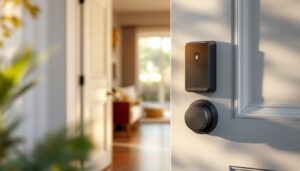
A SimpliSafe smart lock is an electronic deadbolt that replaces or augments your traditional lock, letting you unlock your door via smartphone, keypad code, or physical key. Unlike full-system smart locks that integrate solely with proprietary ecosystems, SimpliSafe’s offering slots into their broader home security platform while maintaining compatibility with many other smart home hubs.
Homeowners gravitate toward SimpliSafe smart locks because they solve real problems. Forgot your keys on a run? Unlock remotely. Need to let a contractor in while you’re at work? Grant them temporary access without handing over a spare. Live with roommates or family? Each person gets a unique code, and you see who unlocked the door and when.
What sets these locks apart is their balance of functionality and simplicity. You don’t need to be an electrician or smart home wizard to make one work. The SimpliSafe lock installs on most standard deadbolts, and it integrates with the SimpliSafe security system if you already use one, though it works standalone too. Recent SimpliSafe reviews highlight how their smart lock hardware fits into a broader ecosystem without forcing you into an all-or-nothing commitment.
Key Features That Make SimpliSafe Smart Lock Stand Out
Keyless Entry and Remote Access Control
The core appeal is straightforward: unlock your door without fumbling for keys. SimpliSafe smart locks let you set up multiple entry methods. Use the mobile app from anywhere with an internet connection, punch in a PIN at the keypad (handy when your phone dies), or fall back on a physical key if the battery drains, and yes, these locks have a backup power option.
You can create temporary or permanent codes for family, friends, or service providers. Each entry logs who accessed the door and when, giving you a clear audit trail. Revoke access instantly if someone moves out or you part ways with a contractor. No rekeying necessary, just delete the code.
Battery life is a practical consideration. Most SimpliSafe smart locks run on standard batteries (usually AA or 9V) and last 6–12 months depending on usage. The system alerts you when the battery is low, so you won’t get locked out by surprise.
Integration With Smart Home Systems
If you already run a smart home, say, with Alexa or Google Home, a SimpliSafe smart lock can tie into that ecosystem. You might ask Alexa to unlock your door (though for security reasons, most setups require a PIN confirmation) or set automations: unlock at 6 a.m. on weekdays, or trigger a notification when the door unlocks after dark.
With SimpliSafe’s hub, the lock communicates securely via encrypted channels, the same technology their security system relies on. If you’re building out a smart home over time, this lock serves as one piece of a larger puzzle rather than forcing you into a specific ecosystem. Compatibility with popular smart home platforms continues to expand, making future integration more flexible.
Installation Guide: Getting Your SimpliSafe Smart Lock Up and Running
Installation usually takes 30–60 minutes and requires basic tools. Before you start, check that your door is compatible: your existing deadbolt must fit a standard mortise (the rectangular cutout in the door edge). Measure the backset, the distance from the center of the doorknob/deadbolt hole to the edge of the door, and confirm it matches the lock (typically 2-3/8″ or 2-3/4″).
You’ll need: a screwdriver (Phillips and flat-head), a drill with bits, measuring tape, and possibly a utility knife. Some installations require adjusting the strike plate (the metal piece on the door frame that the bolt enters), so have a wood file handy.
Step-by-step:
- Remove your existing deadbolt from the inside. Unscrew the interior assembly, usually two or three screws, and slide the bolt out.
- Install the SimpliSafe smart lock’s new interior and exterior components, feeding the connecting rod through the mortise.
- Secure everything with the provided screws. Check that the bolt extends and retracts smoothly.
- Adjust the strike plate if the bolt doesn’t slide in cleanly: file the opening slightly if needed.
- Install batteries and sync the lock to your SimpliSafe app or hub per the included instructions.
- Test the physical key, keypad code, and app access before you leave home.
If your door’s mortise is damaged or the deadbolt hole is oversized, you may need to drill a new hole or use shims (thin spacers) to center the lock properly. Don’t force components: if something feels stuck, check alignment first. A second pair of hands holding the exterior piece while you secure the interior makes this much simpler.
Security and Safety Considerations
Smart locks are only as secure as their weakest link. SimpliSafe smart locks use AES-128 encryption for app communication and store codes locally on the lock itself, not in a cloud database. This design reduces the attack surface compared to systems that store everything online.
That said, keep these practices in mind: Change your PIN regularly (every few months). Don’t use sequential numbers (1234) or birthdays, treat it like a password. If you share codes with contractors or guests, set expiration dates and delete them when the job ends.
Physical security still matters. A deadbolt is only as strong as the door frame and strike plate. If your door’s frame is weak or hinges are exposed, even the best smart lock won’t prevent a kick-in. Reinforce your frame with a strike plate rated for security (3-inch screws into the stud, not just the door jamb). SimpliSafe door locks work best alongside these baseline protections.
Battery failure is a real risk, but all SimpliSafe locks include a manual key override and low-battery alerts. Keep your spare key somewhere secure but accessible, a friend’s house, a lock box, not under the doormat.
For renters, confirm with your landlord that installing a smart lock is permitted. Many landlords accept them if you agree to reinstall the original lock upon move-out. If your lease forbids it, a SimpliSafe lock may not be an option.
Pricing and Compatibility With SimpliSafe Systems
SimpliSafe smart locks typically range from $150–$350 depending on the model and features. Entry-level options offer basic app access and codes. Premium models add features like offline access (works without internet if your Wi-Fi goes down) and deeper integration with broader smart home platforms.
If you’re a SimpliSafe security system subscriber, the smart lock integrates seamlessly into your existing setup. Your alarm hub acts as a bridge to the internet, and the lock appears in your unified app alongside cameras, sensors, and other devices. No separate subscription needed, it rides on your current SimpliSafe service.
If you don’t own a SimpliSafe system, a standalone smart lock still functions: you control it via the dedicated app, and codes work via the keypad. You won’t get some advanced features that require the hub, but basic security and remote access remain intact.
Cost-benefit: A stand-alone smart lock alone doesn’t justify the expense if you just want keypad entry, a traditional keyed deadbolt with a keypad overlay runs $50–$100. Where the smart lock shines is integration, audit trails, and managing multiple user codes remotely. If you’re already investing in smart home tech or a security system, the incremental cost becomes reasonable. Check current smart home technology reviews for updated pricing and comparisons with other brands before purchasing.